Common Acoustic Design Challenges in Commercial and Mixed-Use Buildings
Commercial mixed-use buildings are well known for presenting unique engineering challenges. These developments blend smaller commercial areas (usually on the lower levels) with comfortable residential areas above, creating a thriving precinct for living, working, and relaxing. As a developer, creating this kind of property presents an exciting opportunity for diversified income within a single property.
However, there are some engineering challenges to conquer first. It’s vital to completely separate the commercial and residential spaces within a mixed-use development. This offers comfort and security to your future residential tenants while maintaining professionalism for your commercial tenants.
One of the most common challenges mixed-use developers face is the acoustic design of their buildings. As acoustic engineering consultants, we want to lift the veil on this aspect of the build. Read on for a breakdown of the most common acoustic challenges we see in mixed-use commercial developments, and discover how we might resolve them using our building services engineering expertise.
A Quick Primer on Acoustic Engineering in Mixed Developments
Acoustic engineering is the management of how sound and vibration interact with a physical environment. In the context of a high-end Auckland skyscraper, it is the difference between a luxury residential experience and a frustrating litigation risk.
In your mixed-use building, acoustic engineering is ultimately about aiming at separating spaces from one another and from the outside world. A resident paying top dollar for a premium CBD apartment expects a quiet sanctuary, but if they can hear the hiss of the coffee machine from the café below them, or the high-traffic lobby, then you are bound to lose your tenants quickly. The same can arguably apply both ways; commercial spaces are much more likely to generate overwhelming noise that can bleed into residential spaces.
This is why our acoustic engineering services focus on creating acoustic separation. It is one of those building services engineering fundamentals that, when done correctly, is completely invisible to your tenants…
But if it’s missed, it’s just about the only thing your tenants will want to talk about.
5 Most Common Acoustic Design Challenges (& Their Fixes)
1. Plant or mechanical noise.
Your final development will require any number of important systems, such as HVAC, cooling towers, and elevator motors. These systems, while vital, can generate significant airborne noise and structural vibrations that propagate through the entire building, threatening the peace of your residential and commercial spaces.
In terms of acoustic design, we recommend utilising inertia bases and high-performance vibration isolation mounts where possible, as this helps minimise travelling sound. Building your heavy machinery hub far from residential zones is also the most cost-effective way to manage noise.
2. Impact noise transmission.
In mixed-use spaces, one of the most common types of sound to carry through walls is impact noise. Think the thud of a dropped barbell in a gym, or the drop of chairs at 5am in an opening café, all drifting into someone’s bedroom as they try to enjoy their sleep.
Impact noise, unfortunately, is more difficult to manage than airborne sound because it travels through the floor slab (an excellent host for sound). To address this most frustrating acoustic design challenge, we generally recommend implementing floating floor systems or high-performance acoustic underlays in mixed-use spaces to stop the vibrations at the source.
3. Cross-talk through duct systems.
Sound is a lot like water in that it tends to take the path of least resistance. In mixed-use spaces, this is one of the biggest acoustic design challenges you will face, because ventilation is also a requirement of healthy living and working.
Unfortunately, the shared service risers and ventilation ducts that cycle in fresh air can also act as acoustic pipes, carrying sound. This is why it’s vital to use acoustic lagging on pipes and incorporate silencers into your ductwork. We are also careful to recommend high-quality sealants for areas where services penetrate walls, lest sound leak through a poorly insulated seal.
4. Reverberation in large spaces.
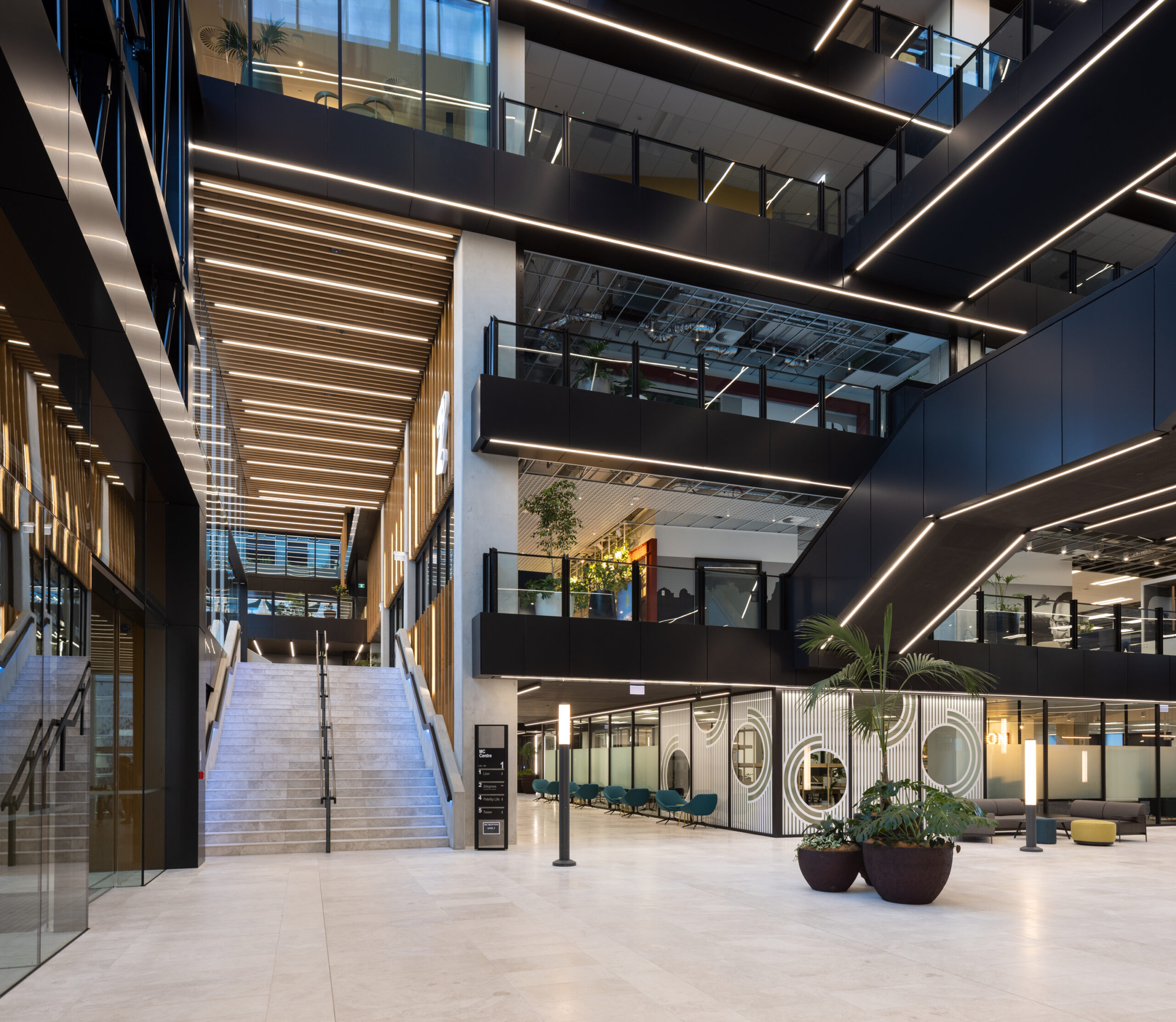
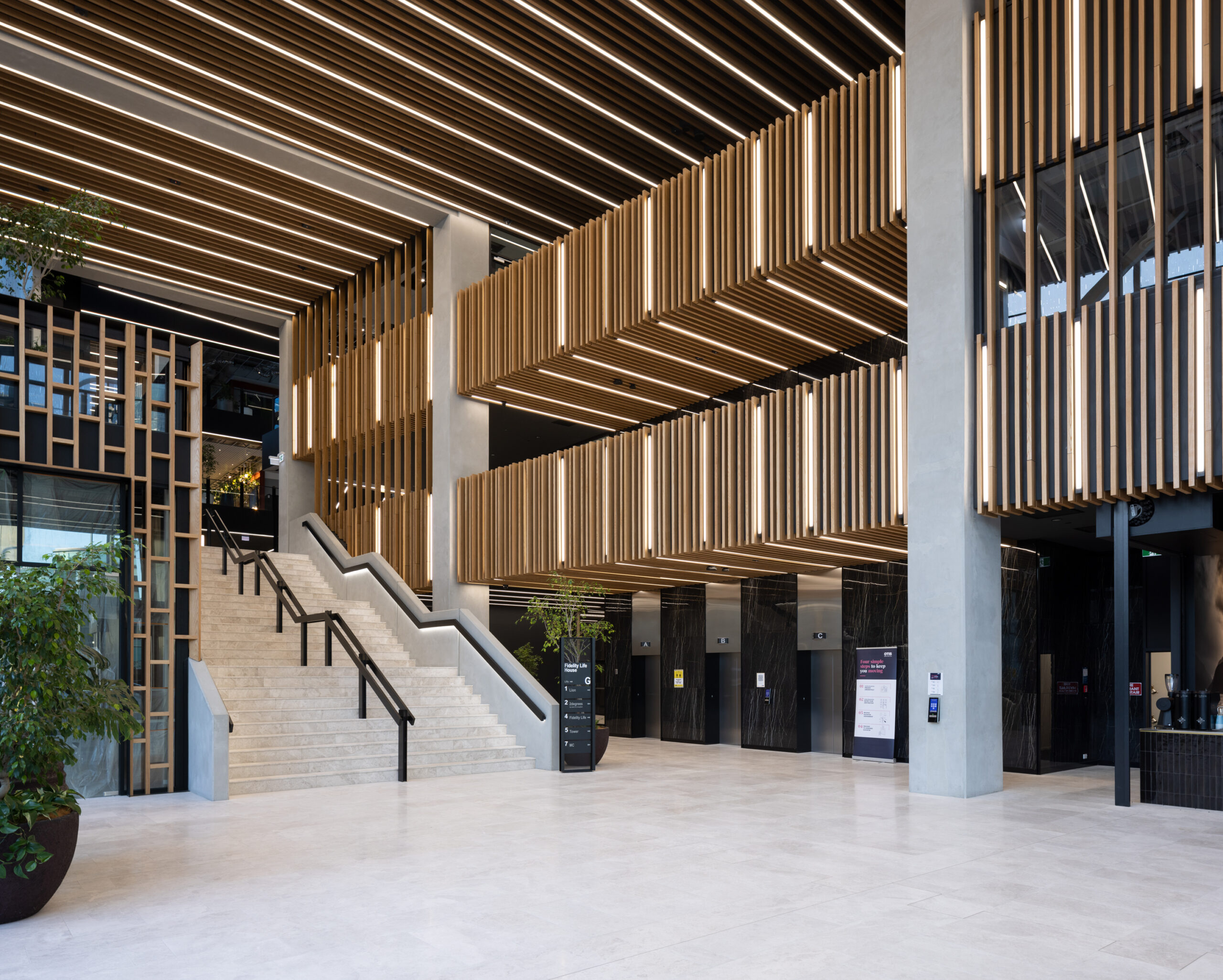
One of the most important acoustic engineering services we provide is material selection, primarily to minimise reverberation in large spaces. Modern Auckland architects are big fans of hard, clean surfaces like glass, marble, and even polished concrete.
These are stunning materials to use from an aesthetic point of view, but in mixed-use developments, they can amplify impact sound transmission and create a reverberation chamber out of your lobby.
To address these acoustic design challenges, we recommend integrating acoustic considerations into your material choices. Opt for sound-absorptive materials such as perforated timber, acoustic plaster, or bespoke fabric baffles to minimise bounce.
5. External noise ingress.
Finally, one of the most present acoustic design challenges for every developer in Auckland (mixed-use or no) is the outdoors. Building in a thriving city space gives you the chance to find excellent tenants who love the urban lifestyle… but it also means contending with sirens, buses, and the general hum of a precinct.
This is why your building acoustic design should incorporate high-quality glazed facades and joinery. When you utilise our building services engineering expertise, you might find that we specify high-STC-rated glass and tight façade seals to minimise external noise ingress.
Ultimately, we find that the most expensive way to handle these common acoustic design challenges is to leave them until your development is finished. Retrofitting soundproofing is a hair-tearing, infuriating process that can have a serious impact on your bottom line (and your tenant satisfaction).
This is why it pays to engage acoustic engineering consultants at the design stage (or as early in the process as is feasible). This ensures your mixed-use development has privacy and sound management baked into its every aspect. The result? A space that feels (and sounds) perfect to live or work in.
Trust the acoustic engineering team at Agile Engineering.
We are an award-winning team providing acoustic engineering services to developers all over the country. Our skills have been tested across a wide range of industries, and we are ready to tackle any acoustic design challenges you may be facing.
Reach out today to have a chat about your project.
Back To All Article